AI-native software or a chatbot bolted on? How to tell the difference
Not every “AI-powered” product is truly AI-native. Here are the real signs to look for — before you sign the contract.
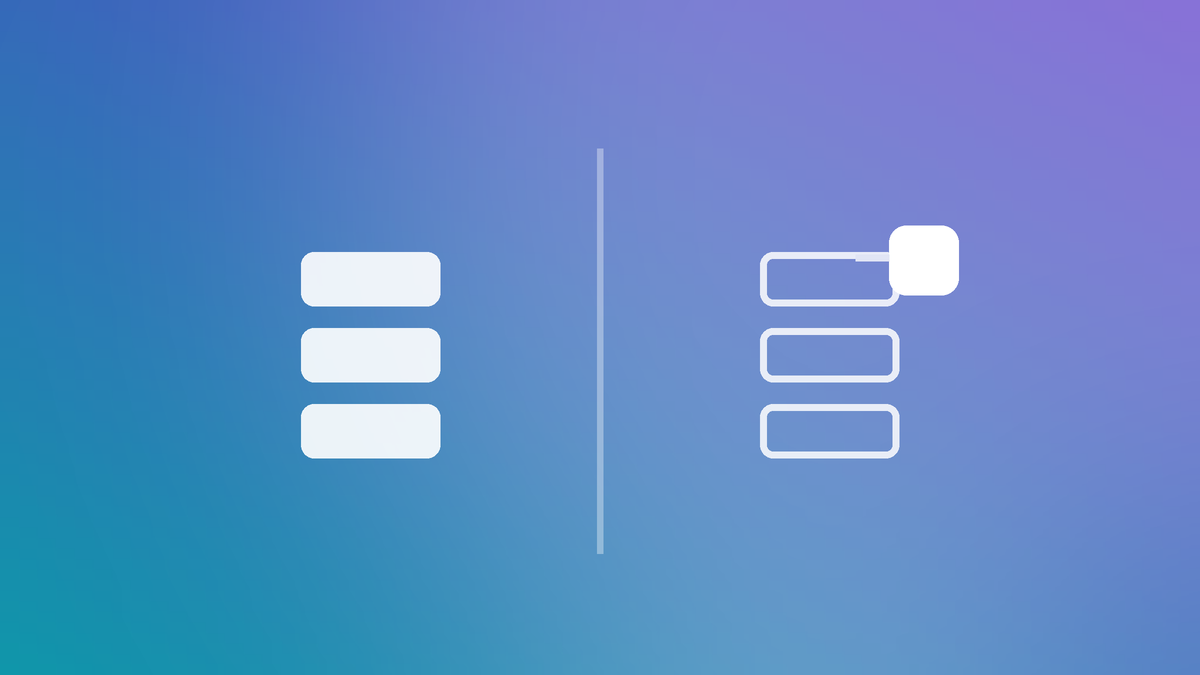
When a software vendor today tells you their system is “AI-powered”, that phrase does not mean the same thing across the board. This article is for anyone who is about to choose a new platform — or who is sitting on a proposal and feeling uncertain. We will show you the concrete signs that reveal whether you are getting a genuinely AI-native system, or simply a chatbot panel glued onto an old interface.
The difference is not in the marketing — it is in the architecture
AI-native software does not mean there is a small robot icon you can click to ask questions. It means that AI is the core of data processing, decision support and automation — not an add-on layer, but the principle around which the entire system is designed.
AI bolted onto a traditional system afterwards, by contrast, is built on top of a pre-existing logic. The underlying processes, data structures and permission management were all designed according to the original, AI-free concept. The AI appears only at the surface.
From a user's perspective, that difference often only becomes apparent months later.
What are the concrete signs?
A few questions worth asking during a demo or a sales meeting:
Does the AI work with your actual data, or does it respond in generalities?
In an AI-native system, the AI works with your company's real data — the product catalogue, customer history, contracts. It does not answer from general knowledge; it reasons within your context. If every question during the demo produces a polished but generic answer, that is a signal.
Does the AI only ask questions, or does it actually do things?
A chatbot asks. An AI-native system acts: it fills in a field, generates a document, triggers a process, flags an anomaly. If every “AI feature” lives inside a text box and you then have to copy the output somewhere else yourself, that is not architecture — it is a convenience layer.
What happens if you switch the AI off?
With a traditional system that has had AI added on, the answer is straightforward: the original software remains and works just as it did before. In a genuine AI-native system, the question does not really make sense — without the AI there is no meaningful operation, because the two layers are inseparable.
Does the AI learn from how you use it?
This is not about global model updates. The question is whether the system becomes more accurate over time based on your data, your patterns and your feedback. If the answer is “no, everyone gets the same AI”, that generally indicates a shallow integration.
A typical situation at a trading company
A trading company regularly receives enquiries by email. They introduce an “AI-powered” system that automatically reads incoming messages. The promise: the AI extracts the data and prepares the quotation.
The reality: the AI lifts the text from the email and pastes it into a field. Pricing, product matching and stock checks are still carried out manually by staff, in separate systems. All the AI has done is save the copy-and-paste step.
That is not worthless in itself — but it is not AI-native. In a genuinely AI-native approach, the system checks stock levels, previous quotes and the customer's order history on its own, and produces a complete, validated draft proposal. The colleague's role is to approve it — not to enter data.
Where most projects stall
The problem with most companies is not their intentions — it is the questions they ask. During a software demo, people rarely ask exactly what data the AI can access and what decisions it makes independently. Questions tend to focus on whether the system “can do this” — and the answer is almost always yes, because every modern system can do something.
The stall typically arrives six to twelve months after go-live, when it becomes clear that processes have not simplified — there is simply one more interface alongside the old ones. Data still has to be connected manually, and AI-generated outputs still have to be checked and moved elsewhere.
At that point, many people conclude that “AI did not deliver”. The real problem was that AI was never embedded in the system — it was only placed beside it.
What about integration?
A genuine AI-native approach does not mean replacing everything you have. Existing systems — accounting, webshop, CRM, warehouse management — can be connected, and the AI works from those sources. The key point is that the integration is part of the architecture, not a retrospective Excel export.
When the AI can see stock levels, outgoing invoices and a customer's previous orders simultaneously, the quality of its suggestions is in a completely different league compared with a system that reads only a single piece of text. The breadth of context is directly proportional to the usefulness of the output.
That is precisely why, when evaluating a solution, you should not only look at what the AI module can do in isolation — you should look at how deeply it is wired into the actual operation of the business.
A quick checklist before choosing software
Before you decide, ask these questions:
- Does the AI work with my own data, or does it respond from a general model?
- Which processes does it complete autonomously, and where does it require human input?
- What remains if I remove the AI component — does the system still work in the same way?
- Can my existing systems be connected, or do I have to start from scratch?
- In six months' time, what can I actually measure to confirm that the AI is genuinely embedded?
If the vendor gives concrete, technical answers to these questions — that is a good sign. If the response is “we will fine-tune that after go-live”, it is worth pressing further.
Shall we look at your company?
A short online conversation that can reveal where AI is worth deploying in your business.
Book a free consultationMore articles
The Transition Roadmap: Turning an Existing Business into AI-First
Most companies weren't born AI-native. That's not a problem, as long as you know the right order to move in and what to leave alone at the start.

AI News: EU Enforcement, Agent Boom and New Features (Oct 2026)
EU AI oversight moved into enforcement mode, agent-based tools accelerated, major platforms rewrote their billing. Two weeks of AI news from an SME perspective.

Partner Portal: When Resellers Stop Ordering by Email
If B2B orders still arrive by email, someone is always copying, re-entering and checking them. Here is what a self-service partner portal looks like in practice.